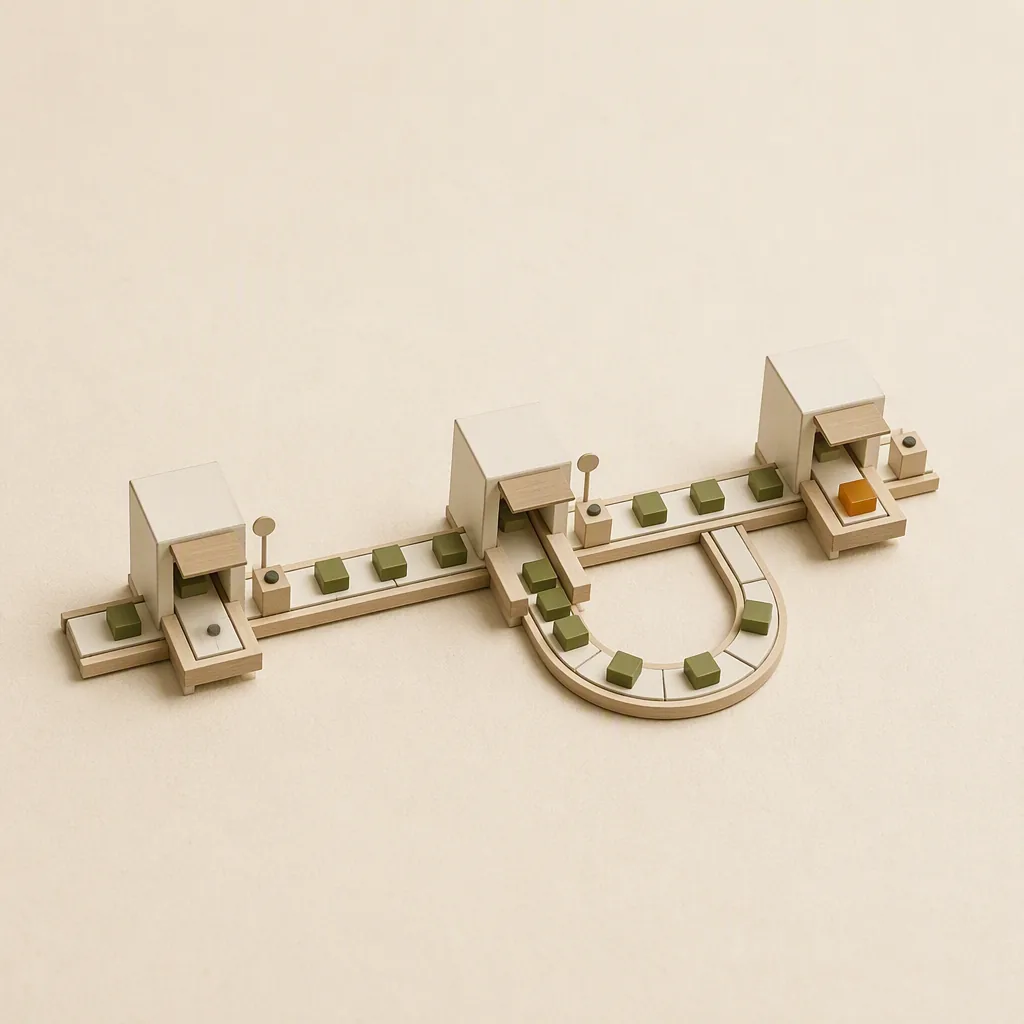
Watch a Deployment replace a Pod without changing its intent
Run a local Kubernetes deletion experiment and compare owner UIDs, desired replicas, Ready status and minReadySeconds before deleting the test cluster.
Foundation
The journal / Ideas in progress
Engineering & everyday learningSoftware, systems, and the things I’m learning along the way. From first principles to AI in production.
Find something to readA little theory. A lot of practice.
Run a local Kubernetes deletion experiment and compare owner UIDs, desired replicas, Ready status and minReadySeconds before deleting the test cluster.

Represent an agent investigation with explicit states, transition guards, and terminal outcomes so its execution can be inspected and resumed safely.
Prepare a small Codex repository task with a baseline failure, a bounded change, and acceptance evidence that makes the entire patch reviewable.

Build an HTML disclosure with details and summary, preserve native state and focus, and choose grouping and animation only when the content needs them.
Trace a four-leaf index, explain a stop page that returns no rows, and separate logical requests from cache misses and physical storage reads.
Diagnose Linux permission denied by checking search permission on every parent directory and distinguishing access from directory listing.
Specify evidence, missing-data behavior, and output requirements for a document assistant, then test the prompt against concrete support questions.

Map source authority, permitted uses, audience and derived copies in a fictional handbook assistant, then design a concrete document-withdrawal exercise.
Compare array shifts and linked-list pointer changes for a concrete editor workload, including the cost of finding the insertion point and retaining a cursor.
Validate units, reporting scope, batch completeness and execution identity before computing a job-duration metric, while preserving legitimate empty results.
Prevent evaluation leakage by grouping related questions and document revisions, using time-aware boundaries, and keeping prompt development away from the final holdout.
Select the newest available producer for each operand, trace two writes to the same register, and distinguish forwarding from waiting for an unavailable result.